
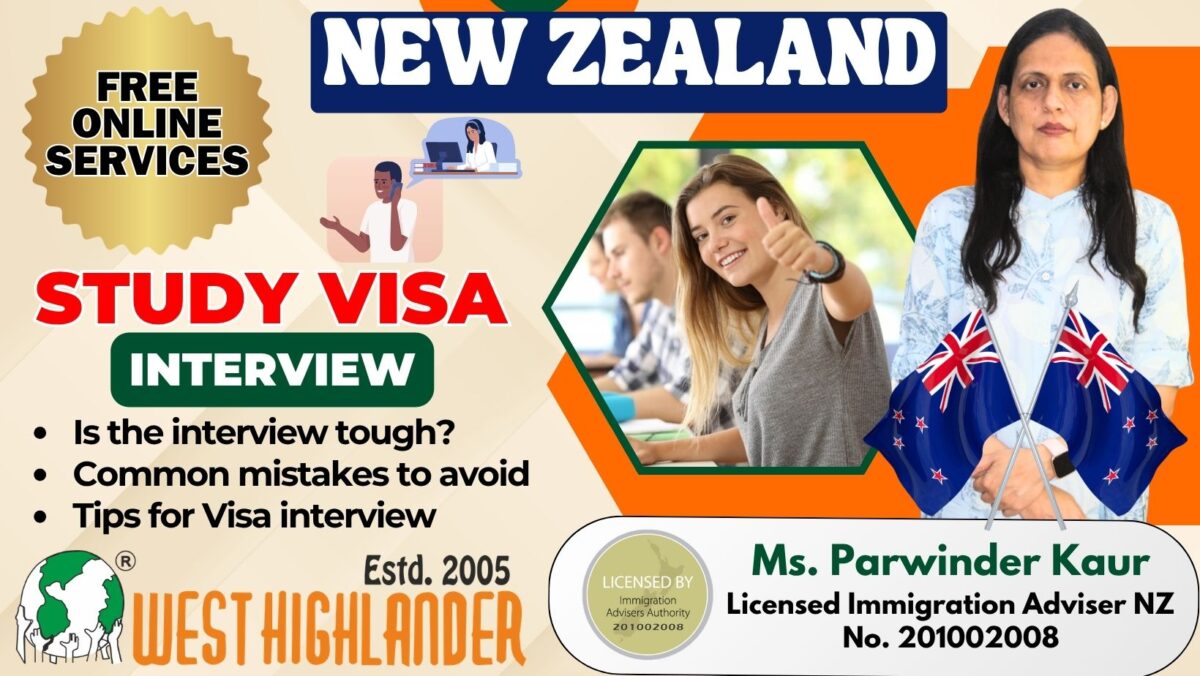
Students dream of studying abroad to build a successful career and gain international exposure. Among the top study destinations in the world, New Zealand has become a popular choice for international students because of its high-quality education system, safe environment, globally recognized qualifications, and excellent career opportunities. Every year, thousands of students apply for a New Zealand student visa to begin their academic journey. While many students focus on selecting the right course and institution, they often feel nervous when they hear about the New Zealand Student Visa Interview. Questions such as “Will I get an interview call?”, “Is the interview difficult?”, and “What questions will Immigration New Zealand ask?” are very common among applicants.
This detailed guide has been prepared under the guidance of Ms. Parwinder Kaur, a Licensed Immigration Adviser and Director of West Highlander Immigration. With years of experience helping students apply for a New Zealand study visa, she has guided many genuine students through the visa process successfully.
The first thing students should understand is that the New Zealand student visa interview is not designed to make the process difficult. Immigration New Zealand simply wants to understand whether the student genuinely wishes to study in New Zealand and whether the study plans make sense. The interview helps visa officers learn more about the applicant’s educational background, chosen course, future goals, and financial arrangements. Many students become stressed when they receive an interview call. However, there is usually no reason to worry if you have selected your course carefully, understand your study plans, and can explain your future goals honestly. In most cases, students who have done proper research about their course and institution find the interview straightforward.
One of the biggest mistakes students make is relying completely on agents, friends, or family members without personally understanding their course details. During the interview, visa officers may ask questions about the subjects included in the course, the reason for choosing New Zealand, future career plans, and how the chosen qualification will help in professional growth. Students who know their course well can answer these questions confidently. The purpose of this guide is to help students understand every aspect of the New Zealand study visa interview. Whether you are preparing to study at a university, institute, or college in New Zealand, this article will help you prepare with confidence.
In this guide, you will learn:
- What is a New Zealand Student Visa Interview?
- Why does Immigration New Zealand conduct interviews?
- Is the interview difficult?
- What questions can be asked?
- How should you prepare?
- Common mistakes to avoid
- Tips to improve your chances of success
If you are planning to study in New Zealand, this guide will help you understand the interview process step by step.
What is a New Zealand Student Visa Interview?
A New Zealand Student Visa Interview is a conversation between a student visa applicant and an officer from Immigration New Zealand. The interview may take place over the phone or through an online communication method, depending on the situation. It is important to understand that not every student receives an interview call. Some students may receive direct visa decisions based on the documents submitted with their application. However, in some cases, Immigration New Zealand may decide to speak directly with the applicant before making a final decision. The interview is simply an additional step that helps the visa officer understand the student’s intentions and verify the information provided in the application.
Many students think that an interview means there is a problem with their application. This is not always true. An interview can be a normal part of the visa assessment process. Immigration New Zealand may want clarification about certain aspects of the application or may simply want to understand the student’s plans better.
The interview usually focuses on several important areas, such as:
- Educational Background: The officer may ask about your previous studies, qualifications, academic performance, and educational history. They want to understand your academic journey and whether your chosen course matches your background.
- Course Selection: One of the most important parts of the interview is understanding why you selected a particular course. The officer may ask why you chose the course and how it relates to your future career plans.
- Institution Selection: Students may also be asked why they selected a specific college, institute, or university in New Zealand. The officer wants to know whether the student researched the institution before applying.
- Career Plans: The officer may ask about future goals and how the chosen course will support career development. Clear career planning often creates a stronger impression.
- Financial Arrangements: Students should also be prepared to discuss tuition fees, living expenses, sponsors, education loans, and financial support arrangements.
The interview is not a test of English fluency or intelligence. Immigration New Zealand is mainly interested in understanding whether the student is genuine and has realistic study plans.
Is the New Zealand Student Visa Interview Tough?
This is probably one of the most common questions students ask before applying for a New Zealand study visa. The simple answer is no. The New Zealand Student Visa Interview is generally not difficult for students who are genuine and properly prepared. Many students become nervous because they hear different stories from others. Some believe that the interview is very strict, while others think difficult questions are asked. In reality, the interview experience often depends on how well a student understands their own application. Think about it this way. If you have personally selected your course, researched your institution, planned your career goals, and arranged your finances properly, then answering questions becomes much easier. You are simply explaining your own plans.
Problems usually arise when students are not familiar with the details of their application. For example, some students may not know the subjects included in their course. Others may not know why they selected a particular institution. During the interview, such students may struggle to provide clear answers. Immigration New Zealand is not looking for perfect answers. Officers are not expecting students to memorize long speeches or complicated information. Instead, they want honest and logical explanations. For example, if a student chooses a postgraduate business program after completing a bachelor’s degree in business and gaining relevant work experience, the study pathway appears logical. The student can easily explain why the course is important for career growth. On the other hand, if a student selects a completely unrelated course without understanding its relevance, the officer may ask additional questions to understand the reasoning. This is why preparation is important. Students should focus on understanding:
- Why they want to study in New Zealand
- Why they selected the course
- Why they selected the institution
- How the course supports future career goals
- How their studies will be funded
When students know these details, the interview becomes much less stressful. According to Ms. Parwinder Kaur, many students who prepare honestly find the interview much easier than they initially expected. Confidence comes from knowledge and preparation, not from memorizing answers. The best approach is to remain calm, listen carefully to every question, and answer honestly. Remember, Immigration New Zealand wants to understand your plans, not trick you.
Why Does Immigration New Zealand Conduct Student Visa Interviews?
Many students wonder why Immigration New Zealand conducts interviews when they have already submitted documents with their visa application. The answer is simple. Documents provide written information, but an interview allows the visa officer to better understand the student behind the application. A visa application contains academic records, financial documents, admission letters, statements of purpose, and various supporting documents. While these documents provide important information, sometimes officers may need additional clarification. The interview gives the officer an opportunity to verify information and understand the student’s intentions directly. One of the main purposes of the interview is to assess whether the applicant genuinely wants to study in New Zealand. The officer may want to understand:
- Why the Student Chose New Zealand: New Zealand is one of many study destinations available to international students. The officer may ask why the student selected New Zealand instead of countries such as Canada, Australia, the United Kingdom, or the United States. A genuine student should be able to explain the benefits of studying in New Zealand and how the country fits into their educational goals.
- Why the Student Chose the Particular Course: Course selection is a very important part of the assessment process. The officer wants to understand:
-Why the course was selected
-How it relates to previous education
-How it supports future career goals
-What skills the student expects to gain
A logical course selection often strengthens the application.
- Why the Student Selected the Institution: Students should be able to explain why they selected a particular institution. This may include factors such as:
-Course content
-Reputation
-Industry connections
-Facilities
-Learning environment
A well-researched choice demonstrates serious study intentions.
- Whether the Student Understands Their Future Plans: The officer may ask what the student plans to do after completing the course. This does not mean there is only one correct answer. The officer simply wants to understand whether the student has realistic career goals and understands how the qualification will contribute to future success.
- Financial Capability: Studying abroad requires financial planning. Immigration New Zealand may ask questions regarding tuition fees, living costs, sponsorship arrangements, or education loans. Students should be familiar with their financial documents and funding sources.
For genuine students who have carefully planned their studies, the interview is simply an opportunity to explain their goals and intentions clearly.
Is a New Zealand Student Visa Interview Compulsory?
One of the most common questions students ask before applying for a New Zealand student visa is whether the interview is compulsory. The simple answer is that an interview is not mandatory for every applicant. Many students receive their visa decision based on the documents and information submitted with their application. However, in some cases, Immigration New Zealand may decide to conduct an interview before making a final decision.
Students often become worried when they receive an interview call. Some immediately think there is a problem with their application. Others feel nervous because they believe the interview means their visa may be refused. In reality, receiving an interview call does not automatically mean there is a problem. It is often part of the normal assessment process. Every student application is different. Some applications are very straightforward and contain complete information. In such cases, Immigration New Zealand may have all the details needed to make a decision. In other situations, officers may want additional clarification about certain aspects of the application. An interview allows them to understand the student’s plans more clearly.
For example, a student may have a study gap, a course change, previous work experience, or a unique academic background. In such situations, the officer may want to ask a few questions directly. Students should understand that the interview is not something to fear. It is simply a conversation that allows Immigration New Zealand to better understand the applicant’s study plans.
The most important thing is to stay prepared. Even if you are not expecting an interview, it is always wise to know your course details, institution information, financial arrangements, and future career plans. Being prepared from the beginning can make the entire New Zealand study visa process smoother and less stressful.
How Long Does a New Zealand Student Visa Interview Last?
Another question that many students ask is about the duration of the interview. There is no fixed length for every interview because each application is different. However, in many cases, student visa interviews are relatively short and may last anywhere between 10 and 30 minutes. Some interviews may be completed even faster if the student provides clear and confident answers. On the other hand, some interviews may take longer if the officer requires additional information or clarification.
The duration often depends on factors such as:
- Complexity of the application
- Academic background
- Study gaps
- Course selection
- Financial arrangements
- Previous travel history
- Clarity of answers
Students should not focus too much on how long the interview lasts. A longer interview does not necessarily mean a problem, and a shorter interview does not guarantee approval. The goal should simply be to answer honestly and provide clear information. During the interview, officers may move from one topic to another. They may begin with personal and educational background questions before discussing the chosen course, institution, finances, and future plans. Some students become nervous if the officer asks additional questions. This is completely normal. The officer may simply want to understand a particular point more clearly.
The best approach is to stay calm and listen carefully to every question. If you do not understand a question, politely ask the officer to repeat it. It is better to request clarification than to give an incorrect answer. Remember that the interview is not a race. You do not need to answer immediately. Take a moment to understand the question and then respond naturally.
What common mistakes do students make during the interview?
Many interview challenges occur because of avoidable mistakes. Understanding these mistakes can help students prepare more effectively.
- Not Understanding the Course: One of the biggest mistakes is applying for a course without properly researching it. Students should understand: Subjects, Learning outcomes, Duration, Career benefits. A lack of course knowledge can create confusion during the interview.
- Giving Memorized Answers: Some students memorize long responses before the interview. This approach often creates problems because answers may sound unnatural. Immigration officers prefer genuine conversations rather than rehearsed speeches.
- Providing Different Information: Your interview answers should match the information provided in your application documents. Contradictory information can create unnecessary concerns.
- Lack of Confidence: Students sometimes know the answers but become nervous during the interview. Confidence improves when you prepare properly and understand your application.
- Depending Entirely on Others: Some students rely completely on agents, friends, or relatives without reviewing their own application. Remember that you are the person attending the interview. You should understand every important detail related to your course and study plans.
How can you prepare for a successful New Zealand Student Visa interview?
- Good preparation can make a significant difference. Here are some practical tips: Research Your Course Thoroughly, Know: Course structure, Subjects, Duration, Specializations, Career outcomes, Research Your Institution. Learn about: Campus, Reputation, Facilities, Student services.
- Review Your Application Documents: Go through: Offer letter, SOP, Academic documents, Financial documents, Practice Speaking Naturally.
- Do not memorize answers: Focus on understanding your own story and explaining it clearly. Stay Calm, The interview is simply a conversation. Listen carefully and answer honestly.
- Be Genuine: The most important tip is to remain genuine. Immigration New Zealand wants to understand your real intentions and future plans. Honest answers are always better than complicated or exaggerated responses.
Final Thoughts on the New Zealand Student Visa Interview
The New Zealand Student Visa Interview may seem intimidating at first, but it is usually much simpler than many students imagine. The interview is not designed to fail applicants. Instead, it allows Immigration New Zealand to understand the student’s educational goals, career plans, and study intentions. Students who have carefully selected their course, researched their institution, planned their finances, and understood their future goals often find the interview manageable. The key is preparation. If you know why you want to study in New Zealand, why you selected your course, how it supports your career, and how your education will be funded, then you are already in a strong position. There is no need to memorize complicated answers or try to impress the officer with difficult language. Simple, honest, and confident communication is often the best approach. Remember that every successful international student once went through the same process. With proper preparation and the right guidance, you can confidently move forward with your New Zealand study visa journey.
Frequently Asked Questions
Is a New Zealand Student Visa interview compulsory?
No, an interview is not mandatory for every applicant. Many students receive their visa decision based on the documents and information submitted with their application, but Immigration New Zealand may request an interview in some cases.
How long does a New Zealand Student Visa interview last?
There is no fixed length, but student visa interviews are typically relatively short and may last anywhere between 10 and 30 minutes, depending on the application.
Is the New Zealand Student Visa interview tough?
No, the interview is generally not tough for well-prepared applicants who understand their course and can answer questions confidently and honestly.
Why does Immigration New Zealand conduct student visa interviews?
Interviews allow the visa officer to better understand the student behind the application, going beyond the written documents to confirm genuine intent and understanding of the chosen course.
What are common mistakes students make during the interview?
Common mistakes include not properly understanding the course they are applying for, such as its subjects, learning outcomes, duration, and career benefits.
How can you prepare for a successful New Zealand Student Visa interview?
Preparing thoroughly on your course details, reviewing your application documents, and practicing clear, honest answers can help improve your chances of a successful interview.
How West Highlander Immigration Can Help?
Applying for a New Zealand student visa involves much more than simply submitting an application. Students need to select the right course, choose the right institution, prepare strong supporting documents, arrange finances properly, and understand the visa process clearly. This is where professional guidance can make a difference. West Highlander Immigration has been helping students achieve their international education goals for many years. The organization is led by Ms. Parwinder Kaur, a Licensed Immigration Adviser, who has extensive experience guiding students through the New Zealand study visa process.
At West Highlander Immigration, students can receive assistance with:
- Course selection
- Institution selection
- New Zealand student visa applications
- Documentation guidance
- SOP preparation
- Financial documentation guidance
- Visa interview preparation
- Application review and support
One of the biggest advantages of professional guidance is that students gain a better understanding of their own application. This can help them feel more confident if Immigration New Zealand conducts an interview. Whether you are planning to pursue a diploma, bachelor’s degree, postgraduate qualification, or master’s program, proper guidance can help you make informed decisions throughout the process. If you are planning to study in New Zealand and want expert assistance with your New Zealand study visa application, West Highlander Immigration can help you understand the process step by step and prepare for your journey with confidence.
