
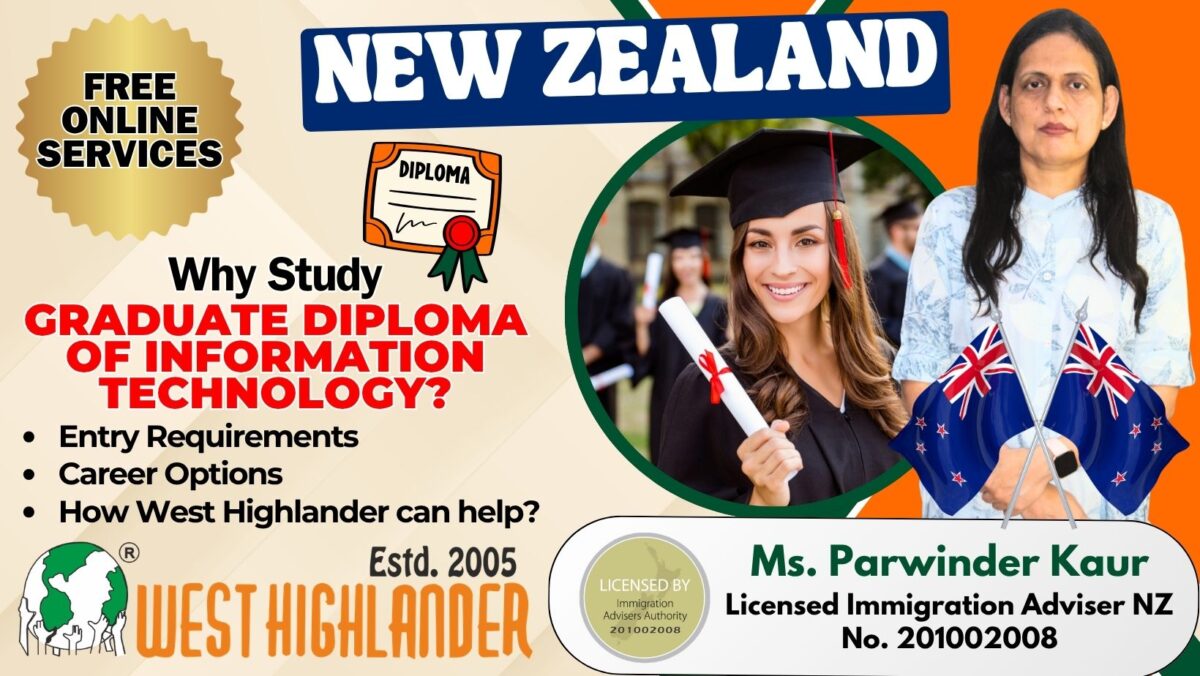
New Zealand is one of the world’s most attractive destinations for international students as it combines the academic excellence with a thriving innovation ecosystem. For a student pursuing a Graduate Diploma in Information Technology, the significance of New Zealand can’t be stressed enough. It provides globally recognized qualifications, strong industry-academia connections and the opportunities to gain practical expertise in a rapidly growing digital economy.
New Zealand is internationally recognized for the quality of its higher education, as it is ranked first among English speaking nations and fifth globally for the overall quality of higher education on the QS World University Rankings 2026.
Also, all the eight universities of New Zealand are ranked among the top 2% of the universities worldwide, making it a highly trusted educational destination for the learners at a global level.
To add another feather in its cap, the Global Peace Index has ranked New Zealand as the second more peaceful country in the world as it welcomes communities, multicultural environment and student- friendly lifestyle providing excellent environment for growth and academic success. New Zealand is ranked first for the work- life balance by the global Life-Work Balance Index (2023), which shows that it enables students to enjoy a healthy balance between studies, part-time work, out-door recreation and cultural experiences.
Also, the OECD Programme for International Student Assessment (PISA), 2022 ranked New Zealand’s students among the five topmost creative thinkers in the world. This makes it evident that New Zealand emphasizes creativity, critical thinking and problem solving which helps students in building the skills that are required to develop innovative digital solutions in today’s technology driven industries.
Another reason for why New Zealand is an ideal destination for the international students to pursue the Graduate Diploma in IT is its focus on sustainability. For instance, according to the Times Higher Education Impact Rankings 2024, New Zealand’s universities are ranked first in the World of Sustainability Stewardship. Here, students benefit from learning in institutions that integrate sustainable practices, innovation and responsible leadership into education and research.
What is a Graduate Diploma in IT in New Zealand?
A Graduate Diploma in IT, a level 7, 120 credit qualification is primarily designed for the graduates who want to transition into the tech industry or to gain specialized skills in areas like software development, networking and information systems. It takes 1 year for those who pursue this as a full time course and up to 3 years for those who pursue this as a part time course. It focuses on software development, networks, and security and systems analysis or information systems. It is primarily built for graduates from non-IT background needing a bridging qualification or IT grads wanting a specific specialization.
What are the entry requirements for foreign students for this course?
Being a level 7 course, it requires that the candidates must have a Bachelor’s degree with 48% marks and for international students, if English is not their native language, the IELTs test with 6.0 (overall) with no band less than 5.5 is mandatory. The other acceptable test options includes TOEFL iBT and PTE Academic. This test is made mandatory to make sure that the students may not face any difficulty during the course due to language barrier.
What will you study in this course?
In this course of Graduate Diploma in IT, generally, the students are enabled to study the core and elective topic like Software Development, Networks and Security and Information Systems. In Software Development, the focus is on object- oriented programming, web and mobile apps and enterprise software tools. Whereas, in Networks and Security, the focus is on routing and switching, cloud infrastructure and digital forensics fundamentals and under IT Systems the focus is on the systems analysis and design, database management and It Projects.
However, the best part of this course lies in the Applied Projects where the students research and solve the real world workplace related technical problems, and the Technical Electives where the students are allowed to choose specialized paths like the advanced web development, database administration and network security.
What are the skills you will gain after completing this course?
After the completion of this course, graduates are equipped with technical expertise, systems analysis and project management skills.
The Technical & Specialist Skills
- Software Development: It includes designing, writing, testing and debugging the computer programmes by using the object-oriented languages, along with building desktop, web and mobile applications.
- Cyber Security: It provides enough know-how to the students helping them in identifying the security threats, assessing vulnerabilities and executing robust mechanisms to protect data and infrastructure.
- Networks and Infrastructure: It trains the students in planning, configuring and implementing routing, switching and virtualized or cloud based enterprise environments.
- Data & Information Systems: It helps in managing database systems, analyzing organizational data needs and applying business intelligence concepts.
Analytical & Management Skills
- System Analysis: It helps the students to inculcate the skills like evaluating current business needs, drafting system design, documentation and proposing viable technical solutions.
- IT Project Management: It equips the students with the practical skills facilitating them to apply structured methods to plan and deliver small to medium scale IT projects or research a workplace problem via a multifaceted, hands-on assignment that serves as the final academic and intellectual experience for students.
- Professional Practice: The professional practice helps the student to gain practical skills when they apply the knowledge they have learnt during the course in the real industries. It gives them the skills needed for navigating legal, ethical and operational standards required in local IT ecosystems.
What are the career options after completing this course?
After completing this course, the students are provided with various job opportunities which are not only lucrative career options but also provides them with immense knowledge and learning, where each day they grow their professional know-how, thereby advancing their future career prospects.
IT Support Specialist/ Helpdesk Engineer:
They provide technical assistance, troubleshooting services and support to internal employees or external clients facing technology issues. Some of their daily tasks includes responding to support tickets, diagnosing hardware faults, configuring employees’ laptops and guiding non-technical users through system fixes.
The key skills required for this role are strong customer service, operating system, troubleshooting, active listening and logical problem-solving.
Solving Developer/ Programmer
The Software Developer or Programmer creates maintains and tests digital applications, websites and enterprise software systems. Some of the daily tasks of a Software Developer includes writing clean codes, debugging errors, collaborating on software design and updating existing software programmes. The software developer should be proficient in programming languages like Python, Java, and Java Script or C # and should also be familiar with Git version control.
Systems or Network Administration
The Systems or Network Administrator manages, secures and configures an organization’s physical and cloud based computer network infrastructure. Some of the daily tasks performed by him/her includes setting up accounts, monitoring network speed, installing firewalls and software updates and also backing up the data storage. He / She should be equipped with the skills like Linux & Windows Server, Cloud Platforms like AWS or Azure and the basic cyber security protocols.
Web Developer
A web developer designs, codes, and deploys websites and web applications ensuring they are functional, secure and user friendly. The key skills required in this role are HTML5, CSS3, Java Script framework, content management systems like word press and responsive design principles.
Junior Business or System Analyst
Acting as bridge between the business management, and technical teams to improve organizational processes and software systems. He/She interviews the staff to find operational bottlenecks, documents software requirements and maps out workflows for the development teams. Some of the key skills required for this role are knowing how to analyze data using Excel, or SQL, clear technical documentation, communication and process mapping.
Why should one choose a Graduate Diploma in IT instead of a Master degree?
| Cost category | Estimated amount (NZD) |
|---|---|
| Tuition at polytechnics/institutes of technology | NZD 23,100 – 27,790/year |
| Tuition at major universities | NZD 36,000+/year |
| Southern Institute of Technology (SIT) – tuition + resource fee | NZD 20,800 total |
| Living expenses (mandatory funds) | NZD 20,000/year |
| Return ticket allowance | NZD 2,000 |
The Graduate Diploma in IT is more attractive to a person who wish to get job ready in a short span of time. Yes! You have heard it right. Do you know that a Graduate Diploma takes on 1 year in place of 1.5 to 2 years long Master degree? It is also comparatively affordable than a Master degree. The average fees is NZ$23,100 to NZ$27,790 per year at polytechnics and institutes of technology (such as Otago Polytechnic or Unitec), and up to NZ$36,000+ at major universities. Another reason for why it is more attractive among students than a Master degree is that it facilitates quick earnings as it equips you with the skills that are highly sought after in the real-world business operations.
However, apart from the course- fee the students should be having the mandated funds of NZ$ 20,000 for living expenses and NZ$ 2000 for the return ticket.
How to choose a right Graduate Diploma in Information Technology provider in New Zealand?
Southern Institute of Technology (SIT)
The Graduate Diploma in IT, level 7 course offered at SIT covers the skills like the analysis of information systems, for instance, the feasibility for installation, development of information and configuration and also includes troubleshooting the information networks, management of internet sites and associated software, making it an ideal choice for the students who wish to study in New Zealand.
It provides a 1 year course. The admission takes place in February each year. For international students, IELTs test is mandatory, with an academic score of 6.0, with no band scoring lower than 5.5. For the Pearson Test of English (PTE Academic), the score of 50 with no band score lower than 42.
Moreover, the students will have completed all the requirements of graduation or graduate diploma in a relevant field.
The tuition fee is NZ$ 19000 (with scholarship included) and the resource fee is NZ$ 1800, with the total amounting to 20,800.
To briefly talk about the course contents, it includes Systems Analysis and Design, Routing & Switching, a Project to solve a workplace problem, Information Systems in Management, Advance Networking, Professional Skills for Information Technology and System Security.
Nelson Marlborough Institute of Technology (NMIT)
The Graduate Diploma in Information Technology (Level 7) at Nelson Marlborough Institute of Technology (NMIT) is offers an excellent pathway for international students who already hold a graduate degree and wish to build a career in New Zealand’s fast-growing IT sector. This is a one-year programme and combines industry-focused learning with practical project work, enabling students to develop advanced skills in software development, networking, cloud services, databases, web technologies, and industry infrastructure. A unique feature of the programme is its personalised study plan, which allows the students to align their courses to their career goals and specialise in either Software Development or Networking. The students also complete a Graduate Diploma Project, working on which they valuable hands-on experience in solving real-world IT challenges. The graduates are well prepared for roles such as Software Developer, Network Engineer, Cloud Administrator, Systems Analyst, Database Developer, and IT Support Specialist. With the internationally recognised qualifications, experienced faculty, and strong industry relevance, NMIT provides an ideal environment for the international students seeking career growth in information technology.
Waikato Institute of Technology
The Graduate Diploma in Applied Information Technology (level 7), a 1 year fulltime programme is designed for the graduates who wish to build the practical and industry- relevant skills in the field of Information Technology. The programme is offered three times in a year, in February, July and November.
The international applicants need the IELTs score of 6.0 (overall) with no individual bands below 5.5 or an equivalent English language qualification. In this course, the students are made to gain practical knowledge in designing, developing and managing modern IT systems while they strengthen their communication, problem solving and team work skills.
The programme offers specializations in Network Engineering, Software Engineering and Web Development and allows the student to focus on their career interests where depending upon their chosen specialization, the learners develop expertise in areas such as cyber security, network administration, database management, software testing and big data analytics.
Graduates are well prepared for a variety of professional roles, including the software engineer, web developer, network engineer, IT project manager, IT manager and cyber security specialist. The qualifications also provides a pathway to post graduation for those who wish to continue their education. The tuition fee is NZ$ 26000 with the additional charges including an application fee of NZ$ 960, a student service levy of NZ$ 327 and an insurance amounting $ 344.
Otago Polytechnic
The Graduate Diploma in Information Technology (Level 7) is a one-year, full-time programme provided for graduates wishing to develop the advanced computing and information technology skills or expand their expertise in specialist IT field. The programme is highly flexible, and allows the students to create a personalised study pathway based on their career goals and interests. The students are provided the option to specialise in areas such as programming, databases, networking, cloud computing, cybersecurity, artificial intelligence, mobile application development, web development, business analysis, and user experience (UX) engineering. The curriculum combines theoretical knowledge with practical skills and the project-based learning, thereby enabling the students to solve real-world IT problems using industry-standard tools and technologies. Throughout the programme, the students complete hands-on studio projects, collaborate in teams, and develop professional communication and project management skills that are highly valued by employers. The graduates gain the technical expertise required for careers as software developers, programmers, systems administrators, database administrators, network engineers, cybersecurity specialists, cloud engineers, IT consultants, computing services managers, and business analysts. This qualification also provides a strong foundation for the postgraduate study in information technology. With growing demand for skilled IT professionals both in New Zealand and at the global level, this programme enhances graduates’ employability and prepares them to work across a wide range of industries, making it an excellent choice for those seeking to build a successful career in the rapidly evolving technology sector.
Eastern Institute of Technology
It is a level 7, 120 credits programme, provided for 1 year for the full time students, with intakes in February and July, and the fees for this programme is NZ$ 26,000. This programme is suitable for the students who haven’t studied IT at a tertiary level. After pursuing this course the students are fit to be employed as system analysts, web developers, business analysts, IT infrastructure, e-commerce advisor, and project manager, as it provides you with advanced IT skills ready for immediate application in industry.
Ara Institute of Canterbury
The Graduate Diploma in Information and Communication Technologies (Level 7) at Ara Institute of Canterbury, a one-year full-time programme which caters to the goals of graduates from various academic backgrounds and the professionals who are already working in the technology sector and wish to gain formal IT qualifications or are planning to transition into the ICT industry. The programme provides a flexible and industry-focused curriculum that enables the students to build practical knowledge and technical expertise in key areas of information technology. The students studying in New Zealand can specialise in software engineering, network engineering, or data engineering, while they can also explore the emerging technologies such as artificial intelligence, cloud computing, cybersecurity, and data analytics. This course combines theoretical learning with practical skills and project-based experiences, including a work-integrated project that allows students to apply their knowledge to real-world IT challenges. Throughout the programme, the students develop the highly sought after skills in programming, database design, networking, cloud services, website development, IT project management, and the implementation of technology solutions. Graduates are well prepared for careers as the software developers, the network engineers, the data engineers, the cloud specialists, the cybersecurity analysts, the database developers, the IT consultants, and the systems administrators. The programme also provides an option to pursue the postgraduate study in information and communication technologies. Applicants require a bachelor’s degree in an IT-related field (excluding Ara’s Bachelor of ICT) or an equivalent experience, along with an IELTS Academic score of 6.0 overall, with no band lower than 5.5, or an equivalent English language qualification.
Whitireia and WelTec
The Graduate Diploma in Information Technology is a one-year, 120-credit Level 7 qualification provided for international students who want to step into the rapidly growing ICT industry. The programme develops practical, industry-focused skills in software development, cybersecurity, data science, networking, and interaction design, preparing the students for a wide range of careers in Information Technology. The students can customise their studies by choosing elective courses aligned with their career goals and receive guidance from academic staff while they choose which career pathway is right for them.
The programme emphasises hands-on learning experience using industry-standard tools and techniques, and enables the students to solve real-world business and technical challenges. The flexible part-time study options are also available for students balancing work and personal life. The graduates are well prepared for roles such as software developer, cybersecurity analyst, data analyst, network engineer, UI/UX designer, business analyst, DevOps engineer, and cloud support specialist. After this course, there are so many employment opportunities which exist across the public and private organisations, technology companies, and self-employment.
The international applicants who wish to study in New Zealand must hold a bachelor’s degree in a relevant field or must have an equivalent professional or educational experience. The applicants with an unrelated bachelor’s degree may also be considered, however it depends on the Programme Manager’s discretion. The English language proficiency is required, with an IELTS Academic overall score of 6.0, including no band below 5.5, or an equivalent qualification. This programme is designed to provide an excellent pathway to a rewarding global career in information technology.
Auckland Training Institute
The Graduate Diploma in Information Technology (GDIT) is primarily designed for the international students who want to build or advance their careers in the IT sector. However, this programme is also suitable for the students who possess a bachelor’s degree in a non-IT discipline but wish to gain specialised IT knowledge, as well as those with an IT degree seeking to enhance their expertise in a specific area. The students complete eight courses comprising compulsory and elective subjects in Software Development, Networks and Security, and Information Systems, which allows them to align their studies to their career goals.
A distinctive feature of the programme is its practical, industry-focused approach. Every Graduate Diploma in IT student receives a personal laptop and access to Microsoft software at no additional cost, to ensure that they have the tools needed for learning and project work. The students develop technical and problem-solving skills that prepare them for employment in a wide range of IT roles.
For the international students, the 2026 tuition fee is NZ$24,750, with an additional NZ$2,655 resource fee, which brings the total programme cost to NZ$27,405. A compulsory Student Services Fee of NZ$300 per year (or NZ$30 per month or part thereof) also applies to the students. The programme provides the international students with a strong foundation in information technology and help them in attaining the valuable skills that support global career opportunities in the fast-growing digital industry.
What are the part time work opportunities for the students in New Zealand?
If you are pursuing a Graduate Diploma in Information Technology (Level 7) in New Zealand, then, there are good opportunities to work part-time while studying and transition into the IT industry after graduation. However, it’s important to have realistic expectations, as the job market can be competitive.
International students who wish to study in New Zealand or are enrolled in a Graduate Diploma in Information Technology in New Zealand are offered with a wide range of part-time employment opportunities that allow them to earn an income while gaining valuable work experience. Many students initially take up roles in retail stores, supermarkets, cafés, restaurants, hotels, warehouses, customer service centres, or delivery services, which help them to meet their living expenses. These jobs offer flexible working hours that can be balanced with academic commitments and generally pay between NZ$24 and NZ$30 per hour, depending on the employer, location, and previous experience. As the students progress through their studies and develop practical IT skills, they can pursue more specialised part-time positions related to the IT field. Some of the opportunities include the roles such as IT Support Technician, Help Desk Analyst, Junior Software Developer, QA (Software Testing) Intern, Web Developer, Data Analyst Intern, Cybersecurity Intern, Network Support Assistant, Database Assistant, and Cloud Support Intern. These industry-related positions provide the students the hands-on experience with modern technologies, and strengthen their technical and problem-solving abilities, and at the same time, enhance communication and teamwork skills. Practically working in an IT environment also helps the students build professional networks and gain valuable New Zealand workplace experience, by making them more competitive for graduate positions. By combining the academic learning with the practical employment, international students significantly improve their career prospects and increase their chances of securing rewarding full-time roles in New Zealand’s growing technology industry after the completion of their graduation.
Part-time work rights
If your student visa includes work rights, you can generally work up to 25 hours per week during your studies and you can work full-time during scheduled semester breaks and the Christmas/New Year holiday period.
Post Study Work Visa
New Zealand provides the post study work opportunities to the students who have pursued the Graduate Diploma in IT for the duration equivalent to the duration of their course, provided that they have studied for at least 30 weeks as a fulltime student in New Zealand.
The Post Study Work Visa (PSWV) offers significant benefits to the international students who have studied a Graduate Diploma in Information Technology (Level 7) in New Zealand. Subject to meeting Immigration New Zealand’s eligibility requirements, the graduates can stay in New Zealand after completing their studies and gain valuable professional experience in the country’s evolving technology sector.
Frequently Asked Questions
What is a Graduate Diploma in IT and how long does it take?
It is a Level 7 qualification for students who already hold a bachelor’s degree and want to build IT skills. Most providers run it as a one-year, full-time programme.
What are the entry requirements?
A bachelor’s degree (typically 48% or above), plus English proficiency of IELTS 6.0 overall (no band below 5.5), or an equivalent TOEFL iBT / PTE Academic score.
How much does a Graduate Diploma in IT cost in New Zealand?
Tuition typically runs NZD 23,100–27,790/year at polytechnics and institutes of technology, and NZD 36,000+/year at major universities. Southern Institute of Technology, for example, charges NZD 20,800 total (tuition plus resource fee). Budget for around NZD 20,000/year in living costs on top of tuition.
What career options are available after this diploma?
Common roles include IT Support Specialist/Helpdesk Engineer, Software Developer/Programmer, Systems or Network Administrator, Web Developer, and Junior Business or Systems Analyst.
Can international students work part-time while studying?
Yes. Students commonly work part-time in retail, hospitality, customer service, and delivery roles alongside their studies to help cover living expenses, within New Zealand’s permitted work-hour limits.
Is a Graduate Diploma in IT a good alternative to a Master’s degree?
For many students it is: it is shorter and more affordable than a Master’s while still meeting the academic and points requirements relevant to New Zealand study and visa pathways.
Conclusion
In conclusion, the Graduate Diploma in Information Technology (GDIT) in New Zealand provides an excellent pathway for international students who are seeking to build a successful career in the global technology industry. It is successfully designed for the graduates from both IT and non-IT backgrounds, where the programme combines academic excellence with practical skills and the industry-focused learning opportunities, thereby enabling the students to develop in-demand technical skills in software development, cybersecurity, data analytics, networking, cloud computing, and information systems. The students who study in New Zealand also benefit from New Zealand’s innovative education system, modern learning facilities, and the strong industry connections that enhance employability. While studying, the international students have the opportunities to undertake part-time work, gain valuable workplace experience, and build professional networks. Upon graduation, the eligible students may apply for a Post Study Work Visa, allowing them to gain further industry experience and explore long-term career opportunities in New Zealand. With the country’s growing demand for skilled ICT professionals, graduates are well positioned to secure rewarding roles across a wide range of sectors, including the technology companies, the government organisations, the financial institutions, the healthcare, the education, and the consulting firms. Beyond career prospects, New Zealand offers a safe, multicultural, and high-quality living environment that supports both personal and professional growth. Overall, the Graduate Diploma in Information Technology provides an ideal combination of quality education, practical experience, global career opportunities, and potential pathways for future employment and long-term settlement, making it an attractive choice for aspiring IT professionals.
If you are planning to choose New Zealand as your study destination for the Graduate Diploma in IT course, then you can contact us for free counselling as we provide the ethical, genuine and complete information about the New Zealand Study visa process. We guide and assist you regarding the right application process. Our Director, Ms. Parwinder Kaur is a fully Licenced Immigration Advisor and therefore the authorised person to guide you in your New Zealand Student Visa Process.
