
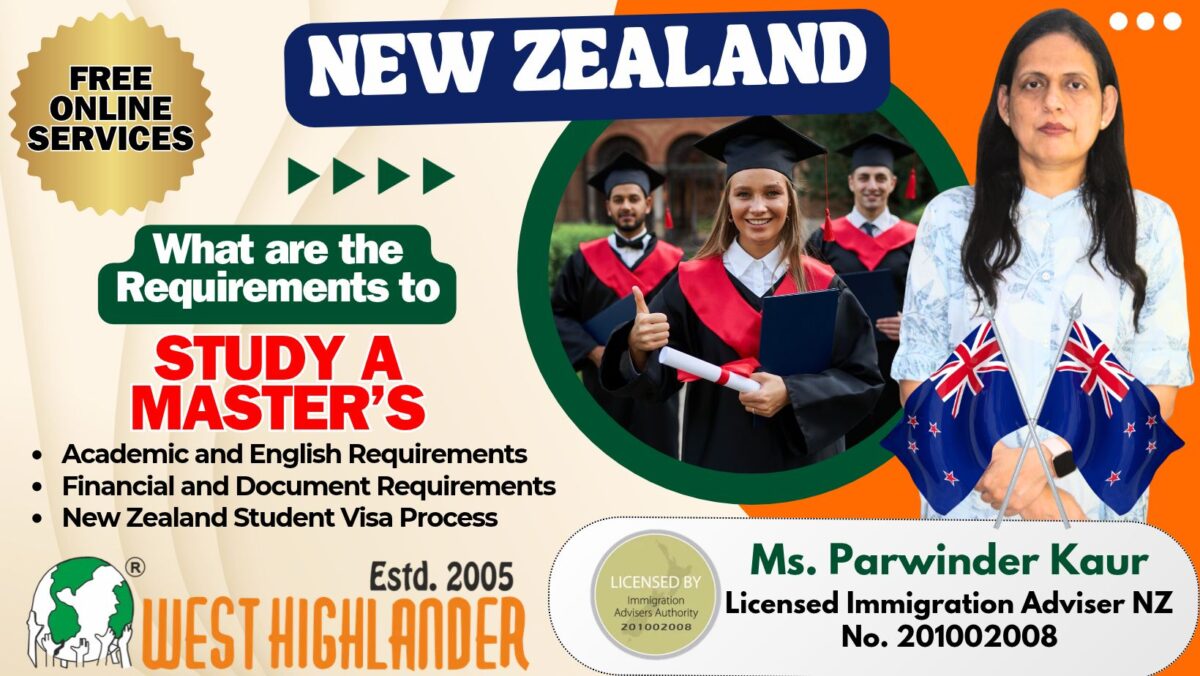
Studying a master’s in New Zealand can be a great option for students wanting to develop their knowledge, professional skills and increase their career oppurtunities. There are a variety of post graduate courses available in New Zealand ranging from Business, Information Technology, Engineering, Healthcare, Education, Agriculture and Management.
However, there are several things to consider when looking to get into a master’s course. Students will need to meet the entry requirements for their selected institution including academic and English language requirements. They will also need to pay for their tuition, prove they have enough funds and meet the requirements set by Immigration New Zealand (INZ) to get a student visa for New Zealand.
This can vary depending on the course, university/institute, previous qualification and type of master’s course.
Below we will run through the key requirements to study a master’s in New Zealand in 2026 including academic requirements, IELTS/English test requirements, study gap, financial requirements, documents and student visa requirements.
What are the basic requirements?
To study a master’s in New Zealand students will generally need to have a recognised bachelor’s degree. They will also need to have the correct academic grades, English language level and an offer of place.
These will vary depending on the course and institution. For example, if looking to study a Master of Business, the entry requirements may differ to studying a Master of Information Technology or Master of Engineering.
There are a number of requirements you should be prepared for:
- Bachelor’s degree – Have completed a recognised undergraduate qualification that meets the entry requirements for your master’s course.
- Academic grades – Have the required grades/GPA in your previous qualification. Some courses will require certain subjects.
- English language – Meet the English requirement for the university/institute. This may include IELTS Academic and other accepted English tests.
- Relevant academic background – Some master’s courses will accept students from a variety of academic backgrounds however some may require a bachelor’s degree in a related subject.
- Work experience – Some professional/master’s courses may require relevant work experience.
- Documents – You will need to provide academic transcripts, certificates, identification documents and any other documents required.
- New Zealand Student Visa – After you have received an offer of place you will need to meet the requirements set by Immigration New Zealand to get your student visa.
Meeting the general requirements does not guarantee you a place. The education provider will review your previous education to determine if you are a suitable candidate.
What academic requirements do I need for a Masters in New Zealand?
Most courses will require a recognised Bachelor degree that is appropriate for the course. International qualifications will be assessed by education providers in New Zealand to determine whether they match the required level of qualifications. For example, if you have a recognised bachelor degree from India then you can apply for a masters course, as long as you meet the entry requirements of the institution, including grades and subject.
Can I apply with a 3 year bachelor?
Yes, you can apply for certain Masters courses in New Zealand if you have a 3 year bachelor. Many Indian students complete a 3 year undergraduate degree such as:
- Bachelor of Commerce (BCom)
- Bachelor of Business Administration (BBA)
- Bachelor of Computer Applications (BCA)
- Bachelor of Arts (BA)
- Bachelor of Science (BSc)
Depending on your institution, subject and grades you may be able to use this to enter into a postgraduate course.
However, you should not assume that any 3 year bachelor will qualify you for any Masters course. Some institutions may require certain academic backgrounds, extra qualifications or high grades.
You may be able to use your BCA to enter into a Master of Information Technology, or your BCom to enter into a Master of Professional Accounting or business related course. This will depend on the university.
Can I apply with a 4 year bachelor?
Yes, you can apply for a Masters course if you have completed a 4 year bachelor.
This may be a suitable academic background for many postgraduate courses. However, your institution will still look at your level of qualification, subjects and grades.
If you have a BTech, BE, BSc Agriculture (4 year) or other professional bachelor degree then you may have several postgraduate options available to you, depending on your subjects and the course.
How do I get in if my bachelor isn’t related?
Some students from a different academic background may be able to enter into certain Masters courses, particularly management, business and other multidisciplinary courses.
For example:
- A BBA may be able to apply for a Master of Management.
- A BCom may be able to apply for certain business/management courses.
- A BCA or BSc Computer Science may be able to apply for relevant IT related Masters courses.
- An engineering graduate may be able to apply for certain management, project management or technology courses.
However, not all institutions will allow you to switch your academic background. Some courses will require you to have studied the same subject previously.
You should pick a course that makes academic and career sense.
What percentage/GPA do I need?
There is no set percentage required for a Masters in New Zealand. It will depend on the university, course and your previous qualification.
Some universities will require you to have achieved a certain grade in your bachelor. Other universities will look at your overall academic record, relevant subjects and previous grades.
As a general guide, the table below shows what you may be able to achieve. This is just a general guide to give you an idea of what you may be able to achieve.
Previous Academic Record General Entry Position
- 70%+ May be able to meet entry requirements for many courses. Course specific requirements will apply.
- 60-69% May be able to enter into several postgraduate courses.
- 50-59% Limited options. Will depend on the institution.
- Under 50% May struggle to get into a Masters course. Will depend on your qualification and provider.
Note: These are not official entry requirements throughout New Zealand. Some universities may have higher/lower requirements.
If you have lower grades you shouldn’t automatically rule out studying in New Zealand. Some institutions will take your full academic record, relevant work experience or other qualifications into consideration.
What if I have low grades?
You can still check whether you meet the entry requirements for certain institutions, however there is no guarantee.
Some things that may be taken into consideration:
- Overall grades – Your institution may look at your grades from all of your semesters.
- Relevant subject grades – If you have good grades in relevant subjects to your intended Masters course this could help.
- Work experience – If you have relevant work experience this may be considered.
- Extra qualifications – In some cases you may have postgraduate diplomas or other relevant qualifications.
It is best to check what the exact entry requirements are before applying for a course.
Do you need work experience to study a master’s in New Zealand?
Not all master’s programs require work experience. Many taught master’s programs will accept students straight from their bachelor’s degree.
However, some professional and specialist courses may require work experience.
If you’re applying for a general Master of Management you may not need any work experience as long as you meet the academic requirements. However, some executive, professional or specialist courses may expect you to have some experience in the industry.
General breakdown of work experience requirements: Master’s program Work experience required? Master of Management Not always Master of Information Technology Depends on academic background and course Master of Business Depends on institution Master of Professional Accounting Not always MBA Often Professional/Specialist master’s May be
You should always check the requirements of the course you’re applying for. If you have work experience you’ll understand the subject better and be able to explain why you’re doing the master’s.
Can you have a gap in your studies for a master’s in New Zealand?
Yes, you can have a gap in your studies when applying for a master’s in New Zealand. There isn’t a set amount of time that you can have a gap for all master’s courses in New Zealand.
However, you must be able to meet the academic entry requirements of the institution and have a clear reason for why you had a gap in your studies.
For example, if you graduated with your bachelor’s in 2022 and are starting your master’s in 2027, you’ll have a 5-year gap but this does not mean you cannot apply.
As long as you can explain what you were doing during this time. Reasons you may have a gap in your studies: There could be many genuine reasons why you have a gap in your studies.
- You started working – you may have started working after you graduated.
- Family – you may have had family commitments.
- Studying – you may have been preparing for English tests, entrance exams or your postgraduate application.
- Financial – you may have needed time to sort out money for your higher education.
- Personal – you may have had health, family or other genuine reasons affecting your education.
Where possible you should provide evidence relating to these reasons. For example a letter of employment, payslips, certificate of experience etc.
Immigration New Zealand may also consider your gap in your studies when considering your genuine intentions for your study visa to New Zealand. Be honest and ensure your reasons match up with your evidence.
Documents Required For Master’s In New Zealand
Students must provide some Academic, Identity and Supporting Documents when applying for a Master’s program. Depending on your institution and course, you will need to provide the following documents:
- Passport: To prove your identity and nationality Class 10 & 12 Certificates Proof of prior studies
- Bachelor Degree Certificate Proof of undergraduate qualification
- Transcripts Detail of what subjects you have done and what marks you received IELTS/PTE/TOEFL Results Proof of English language ability
- Updated CV Your academic and work history (if requested)
- Letters of Work Experience Proof of work experience (if applicable)
- Statement of Purpose (SOP) Give details of why you want to study this course and how your prior studies relate to this course.
Why do I need a Statement of Purpose?
A Statement of Purpose is used to give your reason for wanting to study a certain course. It can be really helpful if you’re changing fields in your studies or have a gap in your studies.
A good SOP should include:
- Background – What qualifications you have and what knowledge you have gained.
- Why this course? – Why this course relates to your Master’s.
- Why this institution? – Give real reasons for wanting to study at this University/Institute.
- Future Goals – How this qualification will help you achieve your future career goals.
Not all education providers will require you to provide an SOP. However, Immigration New Zealand may ask you some questions about your study goals, why you chose this course and your future intentions.
How much money do I need to study a Master’s in New Zealand?
You will need to have enough funds to pay for your tuition fees and living costs in New Zealand. You must also prove to Immigration New Zealand that you have genuine funds. This is an important part of your Student Visa to New Zealand. Ensure you have enough funds well before your intended intake.
How much do I need?
Currently, if you’re studying a tertiary qualification you’ll need to prove you have 20,000 NZD per year of study.
On top of your living costs you must have enough to pay for your tuition fees and travel costs.
Living Costs $20,000 per year Travel Costs $2000
Tuition Fees As set by your education provider
If you’re applying for a 2 year Master’s programme you’ll need to prove you have the correct amount of living costs for the duration of your visa. You must have a realistic plan for covering the rest of your study period. Immigration New Zealand aren’t necessarily looking for you to have all your years of living costs covered however having a clear plan can make your application stronger.
Where can I get my money from?
There are several ways you can prove you have enough money for your student visa. This can include:
- Savings – Provide bank statements to show you have enough funds. Ensure the funds are genuine.
- Education Loan – Provide documents proving you have been sanctioned and given an education loan from a recognised bank.
- Fixed Deposits – Provide evidence of fixed deposits.
- Scholarships – Provide an official letter confirming you have a scholarship.
- Sponsorship – Provide an acceptable sponsor/guarantor to support you.
For Indian applicants this is an important part. Immigration New Zealand may ask for extra documents to see where your money is coming from and prove it is genuine.
If you have a large amount of money suddenly deposited into your bank account without a clear reason, you may be asked more questions. Ensure you keep good records of your savings, earnings, education loans and sponsorship.
Remember: While you must have the correct amount in your bank account, you must be able to explain where your money is coming from and how you’ll cover the cost of studying in New Zealand.
What are the student visa requirements for master’s in New Zealand?
If you’ve been offered a place by an approved education provider in New Zealand, you’ll need to apply for the correct student visa for the course you’re going to be undertaking.
Most international students will apply for the Fee Paying Student Visa. Your application will be checked by Immigration New Zealand to ensure that you meet the necessary academic, financial, health and character requirements.
The main requirements for a student visa are:
- Offer of place: You must have received an offer of place by an approved educational institution stating what course you will be studying, how long it will take to complete and what study mode you’ll be undertaking. If you are applying from overseas you can apply with a conditional offer of place but you must provide an unconditional offer before your visa can be approved.
- Sufficient funds: You must show proof that you have sufficient funds to support yourself whilst in New Zealand.
- Genuine intent to study: Immigration New Zealand must be satisfied that you are going to New Zealand for the main reason of studying. The visa officer may look at your previous education, type of course you have chosen, your financial situation and personal circumstances.
- Health and character: Students must meet the health and character requirements for a student visa in New Zealand. Depending on your circumstances and how long you’re going to be in the country you may need to provide a medical certificate, chest x-ray and/or police certificate.
- Medical and travel insurance: International students must have suitable medical and travel insurance whilst in the country. The insurance must cover for the required period for your student visa and meet the conditions of your education provider.
- Proof of return: Students must show that they can leave New Zealand once their visa has expired. This can be shown by providing proof of onward travel or that you have sufficient extra funds to purchase a ticket.
These requirements will be checked by Immigration New Zealand. Just because you meet the requirements doesn’t mean that you will be approved.
How do I apply for a master’s degree in New Zealand?
Students can apply for a master’s programme and a student visa in New Zealand using a simple process.
Follow the below steps to ensure that your applications are in order.
- Choose your master’s: Decide what subject you’d like to study. Think about what you studied in your bachelor, your academic interests and future career goals.
- Shortlist your providers: Compare the universities and institutes that provide this course. Look at their academic requirements, English language requirements, fees and how long the course will take.
- Check you’re eligible: Look at your previous academic achievements, grades and English language results to ensure you meet the admission requirements.
- Prepare your documents: Gather your academic certificates and transcripts, passport, English language test results and any other documents.
- Apply: Apply to the education provider or an authorised education agent. Ensure all information is correct.
- Receive your offer: If you meet the admission requirements of the institution you may receive a conditional or unconditional offer.
- Prepare your funds: Ensure you have your fees paid and proof of funds to support yourself. Ensure the source of your funds can be explained with the correct documents.
- Apply for your student visa: Complete your online application to Immigration New Zealand. Ensure you include the necessary documentation and evidence.
- Wait: If Immigration New Zealand ask for any more information respond and wait for your final decision.
When should I apply for my student visa?
Ideally you should apply for your student visa 3 months prior to your travel date. Immigration New Zealand advise you to apply 3 months before your travel. Processing times can be longer during busy times of the year so try not to leave it until the final few weeks of your course. Between October and March can be very busy. Also remember that admission deadlines and visa application dates will differ. Plan accordingly so you don’t miss out on your preferred intake.
Can I work whilst studying my Master’s in New Zealand
Yes, International students who meet the criteria may work part-time while studying their Master’s in New Zealand.
From 3rd November 2025 eligible students with a Student Visa can work up to 25 hours per week. Full-time work may also be allowed during your holiday periods. However, please note that not all Student Visas allow this, you need to check your eVisa or visa approval letter to confirm the details.
Research students have seen some changes to their working conditions. Immigration New Zealand have updated the conditions for those applying for new Master’s by Research programmes. You will no longer automatically get unlimited full-time work rights. You will generally be placed under the same conditions as other students.
Can I get a post-study work visa after completing my Master’s in New Zealand?
Yes, you may be eligible for a Post Study Work Visa (PSWV) after successfully completing an eligible Master’s in New Zealand.
A Master’s degree falls under a level 9 qualification in the New Zealand qualification framework. If you have completed a Master’s or Doctorate and have studied full-time for 30 weeks or more in New Zealand you may be eligible for a 3 year Post Study Work Visa.
This gives you an opportunity to gain work experience in your profession.
Some things to keep in mind:
- You must complete a minimum of 30 weeks full-time study in New Zealand for your chosen qualification.
- Your MASTER’S degree must meet the requirements for level 9.
- You must apply within the allowed timeframe.
- You must meet the financial, health, character etc requirements.
Completing a Master’s will not guarantee you permanent residency in New Zealand. You need to meet the requirements of your chosen residency pathway.
Why would my Student Visa for New Zealand be delayed or refused?
If you provide incomplete or unclear information that does not meet Immigration New Zealand’s requirements your application could be delayed or refused.
Common issues include:
- Unclear financial documents – If your funding source isn’t clearly explained INZ could ask for additional evidence.
- Large gap in study – If you have a large gap in your study without a good reason this could cause questions.
- Choosing an unrelated Master’s course – If you are choosing a Master’s course without a clear link to your previous education or career this may need explaining.
- Incorrect information – If there is incorrect information on your academic records, visa form and supporting documents this could cause issues.
- Poor study plans – You should be able to explain why you chose your course, university and why you want to study in New Zealand.
- Incomplete documentation – If your academic records, financial documents or other documentation is missing this could cause a delay.
Each application is considered on a case by case basis. Having a gap in your study, low academic results or having had your visa refused previously doesn’t mean you will automatically be refused. However, you should provide honest explanations for all relevant circumstances with supporting evidence where possible.
How can a Licensed Immigration Adviser assist with my Student Visa to New Zealand?
A Licensed Immigration Adviser can help you understand the immigration requirements for New Zealand and help you prepare your Student Visa.
When looking to enter a Master’s programme there are two key parts to consider, the institution you’ll get accepted into and the Student Visa requirements. Ensure your academic background, course choice and visa documents are thoroughly assessed.
West Highlander Immigration can help you with your study plans in New Zealand, choosing the right course, getting accepted and preparing your visa documents.
Our Immigration Advice is provided by Parwinder Kaur (Licensed Immigration Adviser (New Zealand IAA Licence 201002008 / Australia MARA Licence 1280308)).
We can provide you with professional advice on your individual circumstances. This can be very helpful if you have a gap in your study, low academic scores, had your visa refused previously, changed field of study or complex financial documents.
With the correct preparation you can understand what you need to do and avoid common mistakes.
Frequently Asked Questions (FAQs)
-
Can I study a Master’s in New Zealand after completing a 3-year bachelor’s?
Yes, you can apply for some Master’s programmes after completing a 3-year bachelor’s. However, the institution will need to determine if your qualification meets their academic entry requirements.
-
What is the minimum IELTS score for a Master’s in New Zealand?
A typical requirement for post-graduation is an overall IELTS Academic score of 6.5 with no band below 6.0. Some courses may require higher scores.
-
Can I study a Master’s in New Zealand with no work experience?
Many taught Master’s courses will accept students with no previous work experience. However, some courses (some professional and MBA courses) may require relevant experience.
-
How many hours can I work as a Master’s student in New Zealand?
Eligible Student Visa holders can generally work up to 25 hours per week. You can work full-time during your allowed holiday periods. Please check your individual visa conditions.
-
Can I get a 3-year work visa after completing my Master’s in New Zealand?
Yes, if you complete a level 9 Master’s degree and have studied full-time for 30 weeks or more in New Zealand you may be eligible for a 3 year Post Study Work Visa.
-
Can I apply for a Student Visa to New Zealand with a gap in my study?
There is no set gap for all Master’s applicants. However, you should provide a genuine reason for your gap and supporting documents where possible.
