
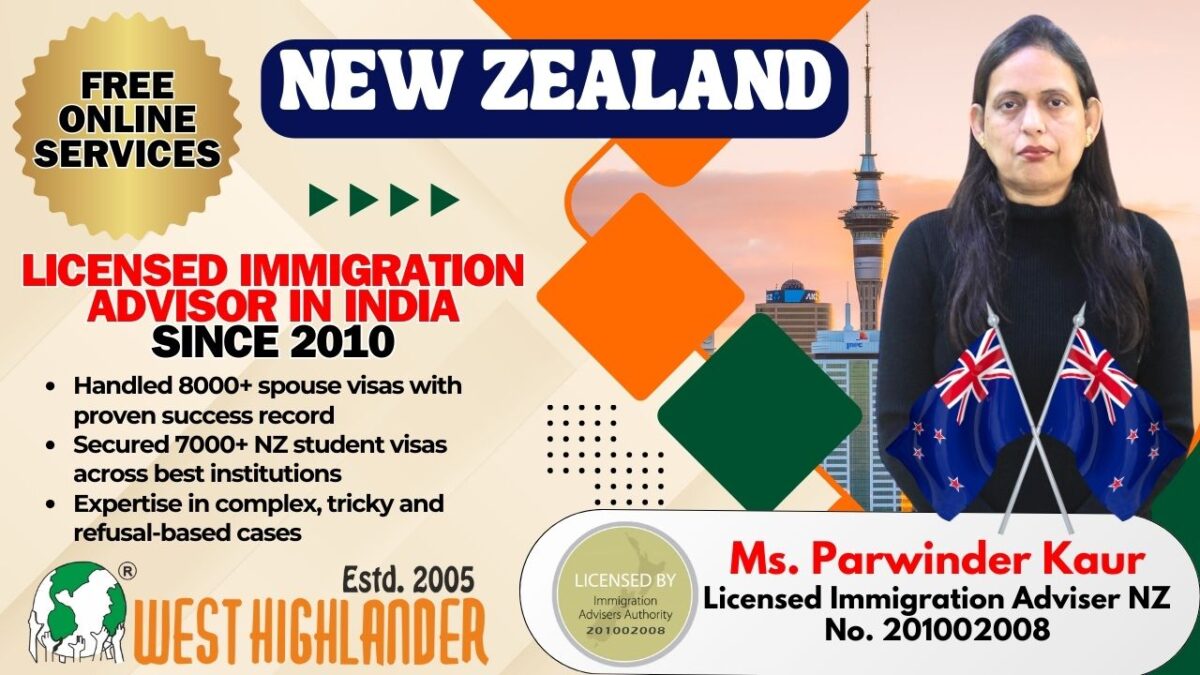
Let’s be real, planning your New Zealand journey in 2026 feels a bit like trying to solve a puzzle without the picture on the box. Everyone has an opinion, every website says something different, and somehow your simple plan turns into 27 open tabs and zero clarity. And that’s when it hits you: you don’t need more information, you need the right information, delivered by someone who actually knows what they’re talking about. Enter the real MVP of the process: a licensed immigration advisor for New Zealand in India. Not the “my cousin said this” kind of advice. Not random social-media rumours. We’re talking about professionals trained under New Zealand law, accountable for every word, and trusted for getting things right the first time. This blog takes you behind the scenes of that world- who LIAs are, why they’re rare, how they safeguard your application, and why one name in India stands out with unmatched trust and leadership: Ms Parwinder Kaur.
What is a Licensed Immigration Adviser (LIA)?
A Licensed Immigration Adviser (LIA) is a trained and legally authorised professional who can guide people through New Zealand’s immigration system. Their licence is issued by the Immigration Advisers Authority (IAA), the government body responsible for making sure that anyone offering immigration advice meets strict standards. In New Zealand, immigration advice is not treated casually, it is regulated by law. That means only a licensed adviser, or someone who is exempt such as a New Zealand lawyer, is allowed to explain visa rules, assess eligibility, help with documentation, or prepare personalised applications. The licensing system exists for one simple reason: to protect migrants. New Zealand wants applicants to receive accurate, honest, and well-informed advice, not random suggestions from unqualified agents. To earn this licence, an adviser must prove they understand New Zealand immigration legislation, follow a professional Code of Conduct, communicate clearly, and act in the best interests of their clients. They must also stay updated with Immigration New Zealand (INZ) policies, which change often and require careful interpretation. In short, an LIA is not just someone who “helps with visas.” They are recognised experts who bring clarity, responsibility, and trust to a process that can otherwise feel confusing and overwhelming.
The Need for Regulation: Why New Zealand created the Immigration Advisers Licensing Act 2007
As mentioned above, a Licensed Immigration Adviser (LIA) must be licensed, but why did New Zealand feel the need to make that law mandatory? The answer lies in protecting people who trust advisers with their life-changing visa plans. Before the Immigration Advisers Licensing Act 2007 came into force, anyone could call themselves an “immigration agent or adviser,” whether or not they actually understood the rules. That made many migrants vulnerable to bad advice, wrong visa applications, lost money, fraudulent practices, or even false documents. With the Act, the Immigration Advisers Authority (IAA) was established to licence and regulate advisers, set competency standards, enforce a Code of Conduct, and maintain a public register of legitimate advisers. Now, if an adviser is licensed, you have legal protection and assurance: you know their advice must meet high standards; if something goes wrong, there’s accountability; if someone pretends to advise but is unlicensed, that’s illegal under the Act. In short: regulation exists to safeguard migrants from fraud and errors, to ensure transparency, reliability and justice turning immigration advice from a risky gamble into a trusted, professional service.
Who Regulates LIAs? Understanding the Role of the Immigration Advisers Authority (IAA)
Licensed Immigration Advisers (LIAs) are the cornerstone of safe and reliable New Zealand immigration guidance, but behind every professional adviser is the Immigration Advisers Authority (IAA), the body that regulates, monitors, and ensures the highest standards in the profession. The IAA was created not just to licence advisers, but to provide trust and confidence to every applicant, protecting them from unqualified or misleading guidance. It maintains a public register of all authorised advisers, giving applicants a clear and reliable way to verify credentials before seeking help. Beyond this, the IAA sets competency requirements and a Code of Conduct that every adviser must follow, covering knowledge of immigration law, ethical responsibility, professionalism, and proper client care. The authority also investigates complaints, monitors adherence to regulations, and has the power to take serious disciplinary actions, including suspending or cancelling licences, ensuring accountability at every level. By offering ongoing guidance, updates, and training to advisers, the IAA keeps the profession aligned with the latest Immigration New Zealand policies. In essence, the IAA acts as the guardian of immigration advice, making sure every applicant works with a qualified, trustworthy, and accountable adviser, turning a complex process into a safe, clear, and confident journey.
Types of LIA Licenses
When someone decides to become a trusted guide for visa applicants, not just a random helper, they must go through a careful licensing process under IAA. This is because immigration advice is sensitive: wrong advice can cost money, time, and hopes. Under IAA’s rules, advisers must meet defined competency standards- which include knowing New Zealand immigration law and instructions, being able to prepare and lodge applications correctly, and communicating professionally in English, with ethics and honesty. Once qualified under those standards, IAA issues a licence- but not all licences are the same. The licence type determines how much freedom an adviser has to give advice, and under what conditions. Here are the main licence categories and what they mean:
- Full Licence: this is the highest level. An adviser holding a Full licence is fully authorised to provide advice on all types of immigration matters: student visas, work visas, spouse/partner visas, residence, appeals, and more. They can work independently and handle every stage of the application process. This licence shows that adviser is fully competent, compliant with IAA’s Code of Conduct, and has all the authority to represent clients with confidence.
- Provisional Licence: this licence is typically for advisers who are new or entering the profession for the first time. A Provisional‑licence holder can still offer advice on the full range of immigration matters, but only under the direct supervision of someone who already holds a Full licence. In effect, they are learning on the job with oversight, until they prove their knowledge and reliability.
- Limited Licence: this licence gives more restricted authority: the adviser can only give advice on certain specified areas of immigration, not all visa categories. For example, their licence might allow them to handle only student visas, or only visitor visas, depending on what scope was approved. This licence type is suitable when the adviser’s expertise or focus is narrow, and when clients have simpler or focused requirements.
What This Means for You (Client or Applicant)?
- If you want full, end-to-end support, from choosing the right visa to preparing documents, lodging application, follow-ups, maybe even appeals, then working with a Full‑licence adviser is the safest and most flexible option.
- If an adviser operates under a Provisional licence, make sure you know who is supervising them (the Full‑licence holder), and that your application will be reviewed by a fully qualified adviser.
- If the adviser has a Limited licence, check exactly which visa categories they are authorised for. If your case falls outside that scope, it’s better to look for someone with a Full licence to avoid unexpected issues.
NOTE: the licence types under IAA exist to match the adviser’s training and supervision level with the complexity of visa tasks they handle. This system ensures that people applying to New Zealand are guided by advisers who are qualified for exactly the kind of visa they need, giving you clarity, safety, and confidence from start to finish.
The Legal Powers of an LIA: What they can and cannot do
A Licensed Immigration Adviser (LIA) is not just someone who fills out forms or offers basic guidance. They are a legally recognised professional, regulated by the Immigration Advisers Authority (IAA), whose primary responsibility is to ensure applicants receive accurate, safe, and professional advice. Knowing what an LIA can and cannot do is crucial for anyone applying for a New Zealand visa, as it protects you from mistakes, fraud, or misinformation.
What an LIA Can Do?
- Provide personalised immigration advice tailored to your situation: A licensed adviser examines your complete profile: education, work experience, financial status, family situation, and long-term goals. Based on this, they recommend visa types suitable for your circumstances, such as student, work, partner, or residence visas. Unlike generic online information, this guidance is customised, ensuring your application meets the specific requirements of Immigration New Zealand (INZ) and avoids unnecessary delays or mistakes.
- Prepare, review, and lodge visa applications accurately: LIAs help you collect the correct documents, fill out forms properly, and submit applications according to INZ rules. They ensure that all information is complete, truthful, and organised in the right format, reducing the risk of rejection due to errors or missing documents. This includes handling supporting statements, financial proofs, and translations if required.
- Act as your authorised representative and communicate with INZ: Licensed advisers can liaise with INZ on your behalf, respond to requests for further information, and follow up on your application status. This is particularly useful if you are overseas or unfamiliar with the immigration process. They serve as a professional point of contact to make the process smoother and less stressful.
- Provide guidance within a regulated ethical framework: Every LIA must follow the IAA Code of Conduct, which mandates honesty, transparency, and acting in your best interest. They must clearly explain fees, any limitations of their licence, and the likely outcomes based on your case. This ensures you receive professional and ethical advice throughout the process.
What an LIA Cannot Do?
- Give advice without a valid licence: Under the Immigration Advisers Licensing Act 2007, giving immigration advice without a licence (or legal exemption, such as being a qualified lawyer) is illegal. Unlicensed advice can put your application at risk and even result in penalties for the adviser. Always verify the adviser’s licence on the IAA public register.
- Offer advice beyond the scope of their licence: Limited-licence advisers can only handle certain visa types, and provisional advisers must work under supervision. They cannot provide advice on cases outside their authorised area. You should always confirm that your adviser’s licence covers the type of visa you are applying for.
- Guarantee visa approvals: A professional LIA can guide and prepare your application, but the final decision rests with INZ. No adviser can promise approval, and any ethical adviser will provide honest assessments instead of unrealistic guarantees.
- Mislead, hide information, or act unethically: LIAs are legally bound to avoid conflicts of interest, false statements, hidden fees, or unethical behaviour. Breaching the Code of Conduct can lead to investigation, disciplinary action, or even licence cancellation by the IAA, ensuring applicants are protected.
Why This Matters for You?
Choosing a licensed adviser means your application is handled safely, professionally, and legally. You have clarity, accountability, and protection, and the adviser is obliged to act in your best interest. Understanding these powers and limits helps you confidently select the right professional and avoid unlicensed or fraudulent agents, making your journey to New Zealand smoother and more secure.
Global Reach of New Zealand LIAs: How LIA Work Onshore and Offshore
New Zealand’s immigration advisory system reaches far beyond its shores, thanks to a growing number of offshore Licensed Immigration Advisers (LIAs) who serve clients around the world. As of 2024–2025, there are approximately 1,498 licensed advisers, of which about 340 work offshore while 1,158 are based onshore in New Zealand. This global reach means that someone sitting in India (or any other country) can access real, legally authorised New Zealand immigration guidance from a genuine LIA, without needing to travel or rely on unverified “agents.” The offshore licence setup exists because the law under Immigration Advisers Authority (IAA) explicitly allows advisers to operate outside NZ, as long as they hold a valid licence– same as those living in New Zealand. For Indian applicants, this global advisory network brings big advantages. First, you get real-time, up-to-date guidance from experts who know the latest policies of Immigration New Zealand (INZ), even if miles apart. Second, you avoid shady “unauthorised agents”- IAA’s public register helps you quickly check if a person is a licensed adviser. Offshore LIAs often understand cross‑border documentation realities, education equivalencies, and common challenges that Indian clients face, which makes their guidance more relevant, practical, and sensitive to the cultural or financial background of applicants. The presence of both onshore and offshore LIAs gives applicants worldwide, including in India access to trusted, regulated, professional immigration support. This global system not only extends reach, but also ensures quality, accountability, and convenience, making migration guidance accessible and reliable no matter where you are.
Current statistics: Licensed Immigration Advisers in India
As of 2025, the number of Licensed Immigration Advisers (LIAs) in India is very small, ranging roughly between 30 to 40 according to the publicly available information on the Immigration Advisers Authority (IAA) Register. When you compare this tiny number with India’s population of over 1.4 billion people, it becomes clear how rare a genuine LIA actually is. Every year, thousands of Indian students, skilled workers, and families seek help for New Zealand visas, yet only a limited group of professionals in the entire country are officially authorised to give immigration advice under New Zealand law. Because the number of licensed advisers is so low, India unfortunately sees many unlicensed or fake “visa consultants” operating without any legal approval. This makes it even more important for applicants to know how to identify a real LIA. The safest and most reliable method is to check the official IAA Public Register, where every licensed adviser’s name, licence type, and licence status are clearly listed. This simple step protects people from misinformation, financial loss, and incorrect advice. In a country as large as India, finding a genuine LIA can feel like searching for one honest expert in a crowded marketplace, but the IAA Register makes that search easy, transparent, and completely trustworthy.
The LIA Code of Conduct: Ethical Standards every Adviser must follow
Now you might be clear with what a licensed immigration adviser is, but how do you know you can trust your adviser completely? That’s why the Immigration Advisers Authority (IAA) created the Code of Conduct. It is a set of strict rules that every LIA must follow, ensuring that their advice is honest, professional, and in your best interest. The Code of Conduct protects you- the client, from unlicensed advisers, hidden fees, misleading information, and unethical practices. It guarantees that your personal documents are safe, your application process is clear, and that every step is transparent. Whether you are in India or anywhere in the world, choosing an adviser who follows these standards is the first step toward a smooth and stress-free New Zealand immigration journey. Key Ethical Standards Every LIA Must Follow
- Honesty and Professionalism: Every LIA is legally required to act honestly and professionally. This means providing accurate information, answering all your questions clearly, and avoiding any exaggeration or false promises. Advisers should respect your situation and guide you carefully, making sure you understand every part of the visa process.
- Clear and Fair Fees: A licensed adviser must always provide a transparent breakdown of fees. You should know exactly what services you are paying for, when the payments are due, and any additional costs. Any advance payments must be handled responsibly and only used for the services agreed upon in the written agreement.
- Written Agreements for Transparency: Before starting your case, an LIA must provide a written agreement. This document outlines the services offered, the fees, refund or cancellation policies, the adviser’s licence number, and the responsibilities of both parties. This protects you and ensures nothing is left unclear.
- Disclosure of Conflicts of Interest: Advisers must always act in your best interest. If they have any potential conflict, such as receiving incentives from an employer, university, or other organization, they are required to disclose it and obtain your consent before continuing.
- Respect and Confidentiality of Documents: LIAs handle sensitive documents like passports, bank statements, and personal identification. They are required to store these safely, maintain strict confidentiality, and only use them for your visa application. Your trust and privacy are a priority.
- Clear Communication: Advisers must communicate clearly and regularly. They should update you about application progress, deadlines, and any issues that arise. They should also explain the rules in simple, understandable language, so you are never confused about your visa process.
- Proper Record-Keeping: LIAs are required to maintain accurate records of all agreements, invoices, correspondence, and application documents. This ensures transparency and accountability if any questions or complaints arise later.
- Complaints handling and Accountability: Every adviser must have a clear internal procedure for handling complaints. Clients should also know that they can report concerns to the IAA, which has the power to investigate and take disciplinary action if the adviser breaches the Code of Conduct.
- Operating Within Legal Limits: An LIA must always follow New Zealand immigration law and work only within the limits of their licence. They cannot give advice outside their legal authority or suggest anything illegal.
- Client-Focused Guidance: Above all, an LIA must focus on the client’s needs. This includes considering your financial situation, personal goals, and cultural background when giving advice. It ensures that every recommendation is practical, relevant, and tailored to you.
Why This Matters for Applicants?
For anyone applying for a visa, especially in India, the Code of Conduct ensures you work with a trusted, ethical, and professional adviser. It guarantees secure handling of documents, fair fees, honest guidance, and reliable communication. By choosing an LIA who follows these rules, you are protecting yourself from scams and unprofessional services, giving your New Zealand visa journey a strong foundation.
Risks of using Unlicensed or Fake Immigration Agents in India
Using a so-called “immigration agent” who isn’t listed on the IAA register, i.e. unlicensed can seriously harm your chances of getting a New Zealand visa. Since the rules changed in 2025, INZ will refuse or return any visa application submitted or prepared by an unlicensed or non‑exempt adviser. That means, even if you submitted all correct documents, if your adviser lacked legal licence, your application is likely to be declined, and there’s no guarantee you’ll get your money back. Add to that: unlicensed advisers often lack proper knowledge of New Zealand’s immigration laws, so they may give wrong guidance on visas, deadlines, or documentation. That increases the risk of rejections, long delays, or future bans. The legal stakes are also very high. Under the Immigration Advisers Licensing Act 2007, giving immigration advice without a licence is a punishable offence. Unlicensed people found offering visa advice, whether paid or unpaid can face fines up to NZD 100,000 and even up to 7 years in prison. A recent case in 2024 saw a repeat offender get almost 3 years in prison and ordered to repay fees to victims. Beyond legal trouble, there are real risks for you as an applicant: you may lose your money, waste time, and miss visa opportunities. Fake agents sometimes promise “guaranteed visa” or fast processing, often asking for large upfront payments. Many times, after payment, they disappear or give fake documents. That not only ruins your plans, but can also leave a negative record with INZ.
Moreover, using unlicensed agents hurts honest advisers and the entire immigrant community, because it reduces trust, leads to more scrutiny, and can tarnish reputations. IAA and INZ treat unlicensed advice as a serious offence, and they encourage applicants to always verify any adviser’s licence using the public register before paying or submitting any application. The risks of choosing an unlicensed or fake immigration agent are not just financial- they can destroy your visa hopes, cause legal trouble, and waste precious time and dreams. If you are serious about New Zealand, always check the IAA register, use a licensed adviser or exempt professional, and protect yourself from fraud.
How to Verify a Licensed Immigration Adviser on the IAA Register?
When you think about applying for a New Zealand visa, the first step is finding the right person to guide you. In India, many people call themselves “visa experts,” but only a Licensed Immigration Adviser (LIA) registered with the Immigration Advisers Authority (IAA) is legally allowed to give New Zealand immigration advice. The good news is that you can easily check their licence online in just a few minutes. Here is a simple, clear, and step-by-step guide to help you verify if your adviser is truly licensed.
- Visit the Official IAA Register Website: The safest and most accurate way to check if your adviser is licensed is by visiting the official IAA Register, which is run by the New Zealand government. This register lists every adviser who is legally allowed to provide immigration advice. It includes their full name, location, licence number, and current status. Always use the official website only. Do not trust screenshots, random lists, or WhatsApp forwards. The official register is updated regularly and gives the most reliable information.
- Search by the Adviser’s Full Name or Licence Number: Once you open the register page, you will see a search bar. Here, you can enter either the adviser’s full legal name or their licence number. A real LIA will always give you their accurate licence number without hesitation. After entering the details, press search. The register will show whether the adviser is listed or not. If you do not find the name, it means the person is not licensed and cannot legally give advice on New Zealand visas.
- Check the Licence Status: It Must Show “Current”: On the adviser’s profile, you will see their licence status. The only status that allows them to give legal advice is “Current”. If the profile shows “Expired,” “Suspended,” “Cancelled,” or “Surrendered,” the adviser is not authorised to provide immigration advice. A current licence means the adviser has completed required training, follows New Zealand’s Code of Conduct, and renews their licence yearly as per IAA rules.
- Review the Licence Type and Any Conditions: Every adviser has a specific type of licence: Full, Limited, or Provisional. A Full licence means they can handle all types of New Zealand visas. A Limited licence may restrict them to certain visa categories. A Provisional licence means they must work under the direct supervision of a fully licensed adviser. By checking this, you can understand whether the adviser is qualified to handle your type of visa.
- Ask for Their Digital Licence or IAA Profile Screenshot: Since 2025, the IAA issues digital licence IDs, not plastic cards. A genuine adviser can easily share their digital licence or a screenshot of their IAA profile. Compare the details with the information on the register. If anything looks mismatched or unclear, double-check the register again. Real advisers happily share proof. Fake ones avoid or delay it.
- Confirm a Written Agreement Before Paying Any Fees: After verifying the adviser on the register, make sure they give you a written service agreement. This is compulsory under IAA rules. The agreement must include the adviser’s name, licence number, services offered, fees, refund policy, and communication guidelines. If an adviser asks for payment without giving a written agreement, consider it a red flag. A licensed adviser always follows transparent and professional processes.
How an LIA supports a Student, Spouse, Family, Visitor and Work Visa Applications
A Licensed Immigration Adviser plays a very important role in helping applicants understand New Zealand’s immigration rules in a clear and correct way. For students, an LIA guides them through every step of the New Zealand student visa process. This includes checking if the chosen course and institution are suitable, explaining financial requirements, helping them prepare acceptable documents, and making sure their application meets Immigration New Zealand (INZ) instructions. An LIA can also help students understand what to expect after approval, such as work rights, visa conditions, and pathways to post-study options. Because student visas have strict evidence requirements, a licensed adviser ensures nothing is missed and the applicant presents their case properly.
For partner-based visas, such as spouse, work, or visitor visas, an LIA provides support by explaining the partnership requirements clearly and making sure the couple’s documents match the rules set by INZ. Many applicants struggle to understand what evidence is acceptable to prove a genuine and stable relationship. An LIA helps organise communication proofs, shared financial records, living-together evidence, and personal history in a simple and correct way. They also guide applicants on how partnership assessments work and what to expect during processing. For partners of workers or students, an LIA gives accurate advice on the type of visa available, work rights, and how long the visa can be granted. This helps couples and families make confident and realistic plans.
For skilled workers, visitor applicants, and families wanting to join their loved ones, an LIA supports them by matching their background with the correct visa category and explaining the rules in easy words. Whether it is a skilled migrant, an accredited employer work visa, a parent or dependent child visa, or a simple visitor visa, an LIA checks eligibility, reviews documents, and prepares the application so it follows INZ instructions exactly. They also keep applicants updated about policy changes, explain immigration letters or requests from INZ, and help respond to them correctly. Since licensed advisers are legally required to follow the Code of Conduct, they provide transparent advice, clear communication, and honest expectations. An LIA becomes a reliable guide for anyone wanting to study, join their partner, work, or visit New Zealand, making the entire visa journey easier, safer, and based on correct information.
What a typical consultation with an LIA looks like?
A consultation with a Licensed Immigration Adviser (LIA) is designed to be clear, organised, and completely transparent. Because LIAs must follow New Zealand’s Code of Conduct, every step of the discussion is professional, honest, and focused on giving correct information. Here is what usually happens during a proper consultation:
- Understanding Your Background and Visa Goal: The first part of the consultation focuses on your personal details, your study or work history, and the purpose of your travel to New Zealand. The adviser asks questions about your education, job experience, relationship status (for partner visas), financial background, and previous travel history. This helps the adviser understand which visa category fits you best, whether it is a student, visitor, partner, or work visa. This step is important because every New Zealand visa has different rules, and the adviser must match your profile with the correct pathway.
- Explaining Eligibility and Visa Requirements in Simple Words: Once the adviser understands your case, they explain New Zealand’s eligibility criteria in clear and easy language. They discuss what Immigration New Zealand (INZ) expects for your chosen visa, what documents are required, and what conditions may apply after approval. You also receive guidance on financial requirements, English language rules (if needed), partnership evidence, or employment documents for work visas. An LIA’s job is to make the rules simple and help you understand them without confusion.
- Reviewing and Checking Your Documents Carefully: During the consultation, the LIA checks the documents you have and tells you which ones are missing or need improvement. This may include educational certificates, bank statements, employment records, relationship evidence, sponsorship letters, or travel documents. Because LIAs must follow professional standards, they do not guess or assume- they give guidance based on correct INZ instructions.
- Advising on Risks, Gaps, and Possible Outcomes: A licensed adviser also discusses any risk factors or gaps in your case, such as low funds, incomplete documents, or unclear relationship proof. They explain how these issues can be managed according to immigration rules. LIAs are required to provide honest expectations, so they do not promise guaranteed approval. Instead, they give a realistic picture of what you can expect.
- Explaining the Next Steps and Service Agreement: Before starting the actual application, an LIA explains the full process, timeframes, stages involved, and their professional fees. They then provide a written service agreement, as required by the Code of Conduct. This ensures transparency and protects the applicant.
Common Misunderstandings about LIAs: Myths VS Reality
| Myths About LIAs | Reality (Correct Information) |
| Anyone who gives New Zealand visa advice is an immigration adviser. | Only advisers licensed by the Immigration Advisers Authority (IAA) can give New Zealand immigration advice (unless exempt under the law). |
| LIAs can guarantee visa approval. | No adviser can guarantee approval. INZ makes the final decision. LIAs can only guide and prepare a strong, correct application. |
| Being in India means an adviser cannot be properly regulated. | Offshore advisers are fully regulated by the IAA, follow the same Code of Conduct, and face the same disciplinary action as those inside New Zealand. |
| A consultant with many years of experience is the same as an LIA. | Experience alone does not qualify anyone. Only people holding a valid IAA licence are legally allowed to advise. |
| LIAs handle documents in secret and clients don’t get full details. | By law, LIAs must be transparent, use written agreements, explain fees clearly, and give clients copies of documents and updates |
| LIAs can submit an application without checking eligibility properly. | The Code of Conduct requires LIAs to assess eligibility carefully, give accurate advice, and explain risks honestly before starting the application. |
| LIAs have access to special shortcuts or hidden visa pathways. | There are no shortcuts. LIAs follow official INZ instructions, the same rules available to the public, but they understand them deeply and help avoid mistakes. |
Introducing Ms Parwinder Kaur- a Trusted Licensed Immigration Adviser
In a country as vast and diverse as India, where thousands dream of moving abroad for study, work, or family opportunities, finding reliable, legally authorised guidance can be challenging. That is where Ms. Parwinder Kaur stands out. She is a fully Licensed Immigration Adviser (LIA) for New Zealand, holding licence number 201002008, issued by the Immigration Advisers Authority (IAA), New Zealand. Her licence ensures that every piece of advice she provides is lawful, accurate, and meets the strict professional standards set by New Zealand law. Ms. Kaur is the Director of West Highlander Immigration Consultancy Services Pvt. Ltd., Chandigarh, founded in 2005. Over the years, she has built the firm like her own child- with patience, care, and a commitment to ethical practices. West Highlander is now a trusted name not just for student visas, but also for spouse and partner visas, visitor visas, and family visas. Applicants can rely on her to guide them through eligibility assessments, documentation, visa processes, and post-arrival support, ensuring they understand each step clearly.
What makes her truly approachable is her practical, transparent, and personalised approach. She explains rules and policies in simple language, helping clients avoid confusion, misinformation, or unnecessary stress. Her experience spans thousands of cases, where she has successfully guided students, professionals, partners, and families, making sure their applications comply with IAA standards and New Zealand immigration law. In a market where unlicensed agents are common, Ms. Parwinder Kaur’s full licence, professional expertise, and genuine guidance offer peace of mind to applicants. Whether someone is planning to study, work, reunite with family, or explore short-term opportunities in New Zealand, she provides support that is legal, reliable, and completely client-focused, making her one of the most trusted immigration advisers in India today
Her specialization in New Zealand Student Visa and Genuine Guidance for Youth
Studying in New Zealand is exciting, but it can also feel confusing. So many rules, documents, and steps make it easy to get lost. That’s where Ms Parwinder Kaur steps in. She has helped students from India and neighbouring countries navigate every part of the student visa process. While she also supports spouse, family, and visitor visas, she is most known for her expertise in handling complicated student visa cases, guiding students patiently and clearly.
- Undergraduate, Postgraduate, and Diploma Student Visas: Ms Kaur assists students applying for bachelor’s, master’s, diploma, and professional programs. She carefully checks eligibility criteria, academic transcripts, and English proficiency requirements, ensuring every document is correct and acceptable to immigration authorities. She explains each step in simple words, so students understand exactly what is needed, reducing the risk of mistakes or delays.
- Previously Refused or Rejected Applications: Many students approach her after facing visa refusals. She reviews past applications in detail, identifies errors or weak points, and guides students to correct them. She helps prepare stronger supporting documents and convinces students how to present a genuine, credible profile, turning what seemed like impossible cases into approved visas.
- Students with Academic Gaps or Non-Standard Backgrounds: For students with breaks in education or unconventional qualifications, she provides strategies to justify gaps or unusual academic paths. By highlighting internships, work experience, volunteering, or other productive activities, she helps students show that they are serious, capable, and committed to studying in New Zealand.
- Post-Study Work Visas and Career Planning: She supports students planning to stay and work in New Zealand after graduation. From understanding work rights to eligibility requirements and document preparation, she guides them to gain meaningful work experience, helping them align study with long-term career goals.
- Complex or Multi-Course Applications: Some students apply for multiple courses, visa extensions, or special programs. Ms Kaur manages these complex scenarios carefully, ensuring all applications are consistent, meet legal standards, and are presented clearly to immigration authorities, reducing the chance of rejection.
- Guidance on Presenting Student Profiles and Motivation: Beyond documents, she advises on personal statements, motivation letters, and additional supporting evidence, teaching students how to present themselves confidently and honestly. Her guidance helps applicants clearly show their goals, achievements, and genuine intent to study in New Zealand.
Expertise in Partnership-Based Visas
Ms Parwinder Kaur has extensive experience guiding couples applying for partnership-based visas in New Zealand. While many applicants struggle to present their relationship convincingly, she helps them understand exactly what evidence is required and how to prepare it in a way that is clear, genuine, and compliant with immigration rules. Her approach is practical she explains the types of documents that matter most, from joint bank accounts and property agreements to photos, communication records, and affidavits and advises clients on how to demonstrate a real and stable relationship. She has successfully assisted couples from India and other countries, including those who faced previous refusals or doubts about the authenticity of their applications. By carefully reviewing each case, guiding clients to collect strong evidence, and ensuring that all submissions meet New Zealand Immigration standards, she turns complicated applications into clear, credible ones. Her guidance is detailed yet easy to follow. Couples know exactly what is expected and feel confident throughout the process. Her honest advice, thorough review of documents, and personalised support make her a trusted adviser for anyone applying for partnership or spouse visas, ensuring applicants can present their relationships convincingly and improve their chances of approval.
Her Commitment to Ethical, Transparent & Professional Immigration Advice
Ms Parwinder Kaur stands out not only for her licence, but for her strong commitment to ethical, transparent, and professional advice. As a fully-licensed adviser, she follows IAA’s Code of Conduct meaning she deals with clients honestly, with respect, and with full care. She always gives clear explanations about what services she will offer and what fees she charges, and ensures there is a written agreement before any work starts a requirement for licensed advisers. She treats every client as an individual, listens carefully to their background and concerns, and explains immigration rules and visa options simply and patiently. Also, she keeps all documents and personal information safe and confidential, respecting privacy at every step. When a case seems difficult or unlikely to succeed, she doesn’t promise guarantees instead she gives realistic, honest advice, explains possible risks, and helps you decide whether to go ahead or try another path. That fairness and transparency builds trust, and shows she is not just an adviser, but a professional committed to doing the right thing for her clients.
How Ms Parwinder Kaur Ensures Smooth File Preparation from Start to Visa Grant
Working with Ms Parwinder Kaur never feels confusing or stressful because she follows a very organised and clear workflow. She prepares every file step-by-step, without rushing, and makes sure the student or applicant understands what is happening at every stage. Her goal is simple no missing documents, no last-minute surprises, and a clean, well-presented file that meets New Zealand immigration rules. Here is how she manages the entire journey from the first meeting to the visa approval.
- Detailed first meeting to understand the applicant’s real background: Her process begins with a long and honest conversation. She checks education history, work experience, gaps, refusals, funds, family profile, travel history, and the applicant’s goals. She does not move forward until she fully understands the person’s situation. This helps her predict possible challenges and avoid mistakes later. This foundation saves time and prevents unnecessary stress for applicants.
- Clear explanation of New Zealand rules and choosing the right visa pathway: After understanding the profile, she explains New Zealand immigration rules in simple words. She guides applicants on the right pathway student, spouse, visitor, family, or work. She also explains requirements such as, funds, evidence of ties, SOP style, or relationship proof. She makes sure the applicant is choosing a genuine option that matches their background so the file looks convincing and strong.
- Step-by-step document list with proper structuring: Ms Parwinder Kaur creates a personalised document checklist. She explains what is required, how it should be arranged, and what format immigration prefers. She reviews every document herself: marksheets, work letters, financial proofs, relationship evidence, SOPs, medicals, PCC, and more. She ensures everything is correct, complete, and consistent so the file is neat and easy for an immigration officer to review.
- Strong drafting and reviewing of all statements and explanations: Every file requires written explanations SOPs, cover letters, gap explanations, refusal clarifications, or relationship summaries. Ms Kaur drafts and reviews each line carefully. She avoids exaggerated statements and focuses on genuine, simple, and honest content. This strengthens credibility and prevents misunderstandings. She rewrites documents until they are clear, error-free, and well-aligned with immigration requirements.
- Careful online lodgement with accuracy and double-checking: Before submitting a visa application, she double-checks every detail- dates, spellings, attachments, forms, and declarations. She ensures nothing is missing, no document is unclear, and no information is inconsistent. This careful approach reduces delays and avoids unnecessary questions from immigration.
- Ongoing support, follow-ups, and guidance until visa decision: Her support does not end after lodgement. She keeps applicants updated, helps with additional document requests, explains processing timelines, and guides them on next steps. She stays available for doubts and reassures applicants throughout the waiting period. Once the visa is approved, she guides them on pre-departure steps and what to do after arrival.
What makes Ms Kaur stand out among all LIAs?
Reaching the end of this guide, one thing becomes clear, New Zealand immigration is not just about filling forms or collecting documents. It is about understanding the rules, presenting your case correctly, and walking on a genuine path that protects your future. This is why Licensed Immigration Advisers play such an important role. Their knowledge, training, and strict Code of Conduct ensure that applicants get fair, honest, and transparent support at every step. And in India, where thousands of people dream of studying, working, or settling abroad, the number of real LIAs is very small. This makes the presence of a trusted adviser even more valuable. Among them, Ms Parwinder Kaur (LIA 201000620) stands out with her long experience, clear guidance, and strong sense of responsibility. She has built West Highlander Immigration since 2005 with steady dedication, helping students, couples, workers, and families move towards New Zealand with confidence and clarity. Her guidance is simple, her approach is genuine, and her advice always comes from real knowledge, not guesswork. If you want support that is legally correct, ethically strong, and truly personalised, choosing a Licensed Immigration Adviser is your safest step and choosing Ms Parwinder Kaur is choosing experience you can trust.